Pelvic Floor Physical Therapy in Northeast Iowa
Many people experience pelvic floor dysfunction throughout their lives. Women may struggle before, during or after giving birth or without giving pregnancy at all due to other conditions. Men may experience pelvic floor dysfunction with age, cancers, or other conditions. At PTS, we offer services to help with any range of pelvic dysfunction. Explore our page or request an appointment in Dubuque or Manchester today!
What is the pelvic floor and how does it do for my body?
Both men and women have a pelvic floor but they function very differently. In women, the pelvic floor is the muscles, ligaments, connective tissues and nerves that support the bladder, uterus, vagina and rectum and help these pelvic organs function. In men, the pelvic floor includes the muscles, tissues and nerves that support the bladder, rectum and other pelvic organs. Your pelvic floor muscles form a hammock from your pubic bone to your tailbone.
Your pelvic floor muscles not only help with bowel and bladder control, but are also a part of what we call your “core” muscles, and help coordinate with many other muscle groups in the body. These muscles need to be able to contract and relax to be healthy and functional in your everyday life. When a person has pelvic floor dysfunction. they may have difficulty with incontinence, constipation, bowel dysfunction, pain with sex, or pelvic pain. When learning about your pelvic floor, it's best to think about the 3 main functions:
Sphincter Control
When a persons pelvic floor is weak, in pain, or otherwise dysfunctioning, they may struggle with holding back urine, gas, and stool. This is called sphincter control. Pelvic floor PT can help you gain control of these muscles again so you can get back to your everyday life with no worries about accidents.
Pelvic Organ Support
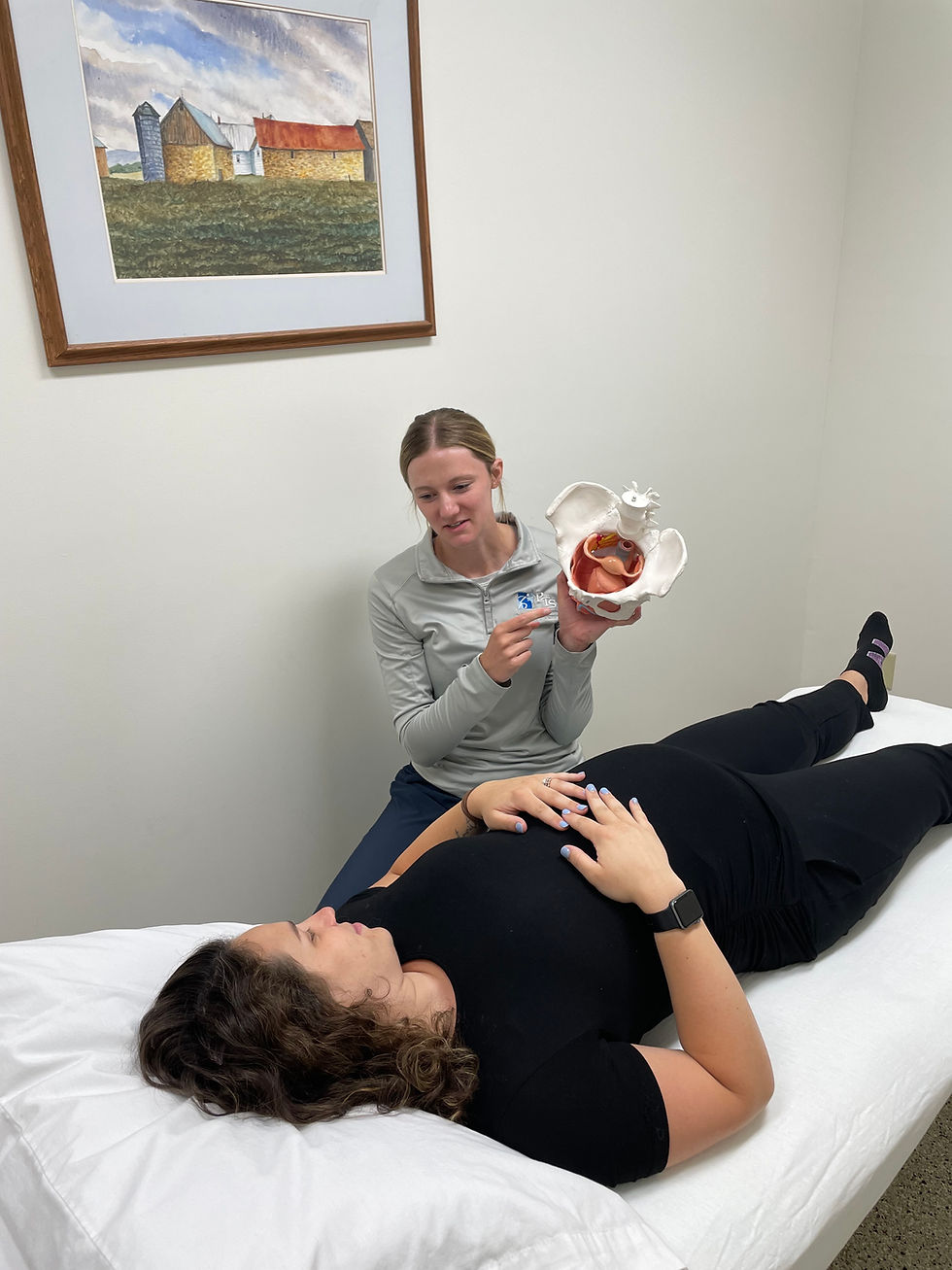
Our pelvis is a large bone that helps support the organs in the pelvic region, however, there are a lot of muscles and connective tissue there as well that help support your bladder, rectum and for women, your uterus. If these muscles are weakened to due age, giving brith or any other health conditions, you may have pain or bowel/bladder dysfunction. Pelvic floor PT can help you strengthen this area to better support these organs.

Sexual Functioning
When our pelvic floor is not working properly our ability to engage and enjoy intimacy with a partner declines. Many people experience an inability to have sex or pain with sex due to pelvic floor dysfunction. But no worries, pelvic floor PT can get you back to where you want to be or help find adaptations to improve sexual functioning.

Interventions & Treatments
Pelvic Floor Muscle Training
Sometimes called kegels, these exercises will teach you to contract and relax your muscles to strengthen them.
Core Strengthening Exercises
Exercises like bridges, squats and bird-dog can help to engage the core and pelvic floor to improve strengthen and reduce dysfunction.
Manual Therapy
Manual therapy is a completely optional treatment that provides hands-on techniques internally to trigger the release of tension and improve vaginal and rectal function.
Behavioral Modifications
Some conditions require a level of behavior training. For example, someone who struggles with incontinence may engage in bladder training (i.e., scheduling voiding and learning to manage urgency). Similarly someone who experiences pain with sex may engage in pelvic floor relaxation techniques (i.e., diaphragmatic breathing, manual release and stretching).