Hip & Knee Pain Relief in Northeast Iowa


Common causes of hip and knee pain
Many times, the hips and knees suffer the similar dysfunctions, disorders, and injuries. For example, overuse injuries such as tendinitis and chronic muscle strains are common in both the hips and knees because both joints are constantly in use.
Hips and knees subject to acute injuries, such as sprains, strains, and dislocation.
Hip and knee pain can also be caused by referred pain from an impinged sciatic nerve, as the nerve travels through both areas. Muscle imbalances in your stance or gait may cause abnormal stresses and premature wear-and-tear in your hips and knees, resulting in painful symptoms of arthritis.
Some painful conditions may be specific to one joint or the other. Cartilage injuries known as labral tears are specific to the hip joint, while meniscal tears are a specific condition affecting the knee joint. Painful injuries that cause instability in the hips can also affect the knees; for example, tight hip flexor muscles and weak gluteus medius muscles can cause the hip to rotate inward without you realizing it. This weakness and instability can cause painful problems such as iliotibial band friction syndrome or patellofemoral stress syndrome, as excessive stress is placed on the knee or kneecap.
Why do I have hip and/or knee pain?
Hip and knee pain can be experienced together or separately- just as the old saying goes, your knee bone is connected to your hip bone; therefore what happens with one, affects the other. Your hip is a ball-and-socket joint that works to support the weight of your upper body, relying on multiple muscles and tissues to keep it mobile and stable, and moving properly. Your knee is a hinge joint, confined to forward-and-backward motions. Individually, your knees support more weight than the hips, up to 6 times your body weight when doing a squat.
Pain felt in the hips and/or knees may originate in the joints themselves, but it may also be a result of an underlying condition in another part of the body. Your hips and knees are part of the same kinetic chain, meaning they make up a combination of weight-bearing joints that must function together as a team in order for your body to function properly. A problem with your knee joint may transmit abnormal forces to your hips, and vice versa. If one part of the kinetic chain is out of balance, stress may be placed on another part of the chain.
Find Relief Today
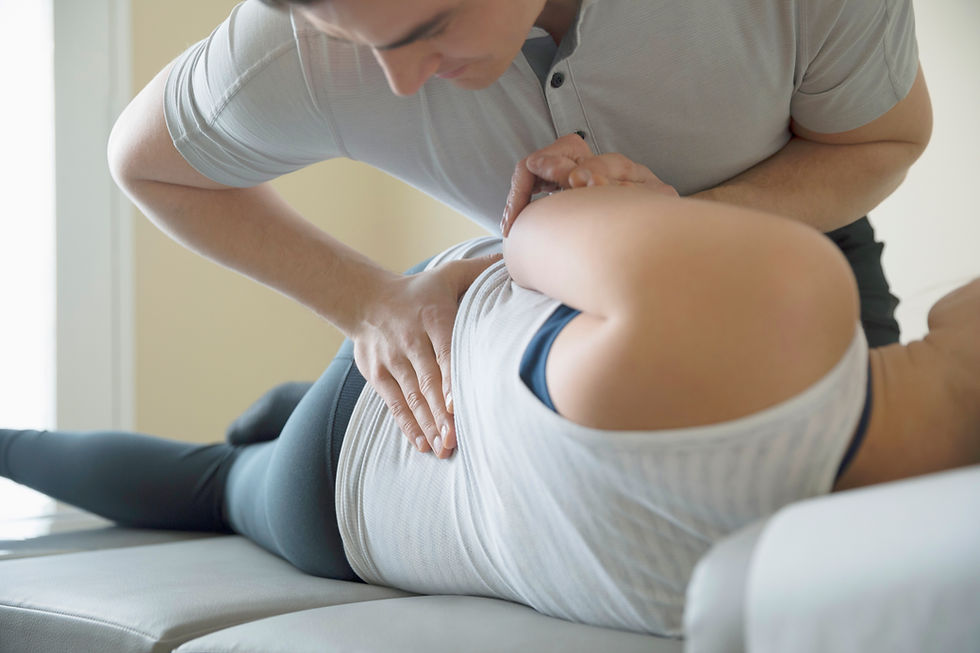
The physical therapy treatments at Physical Therapy Solutions can help to greatly reduce your hip and knee pain. Our physical therapists will examine your hip and/or knee for signs of dysfunction or injury, in addition to examining your strength, posture, gait, and range of motion.
After your physical exam is complete, our physical therapist will prescribe a physical therapy plan for you, aimed at decreasing unnatural stresses and strains. They will also focus on normalizing your joint function so you can get back to living life comfortably.
You will be given targeted exercises designed for relieving joint pain and stabilizing the weak hip and/or knee musculature.
You may also be given exercises designed to strengthen the core, including your lower back, lower abdominal, and/or pelvic muscles. Additional specialized treatments may also be incorporated as our physical therapists deem fit, such as, joint mobilizations to improve joint movement or other soft tissue treatments that relieve pain and promote the healing of damaged hip and/or knee tissue.